

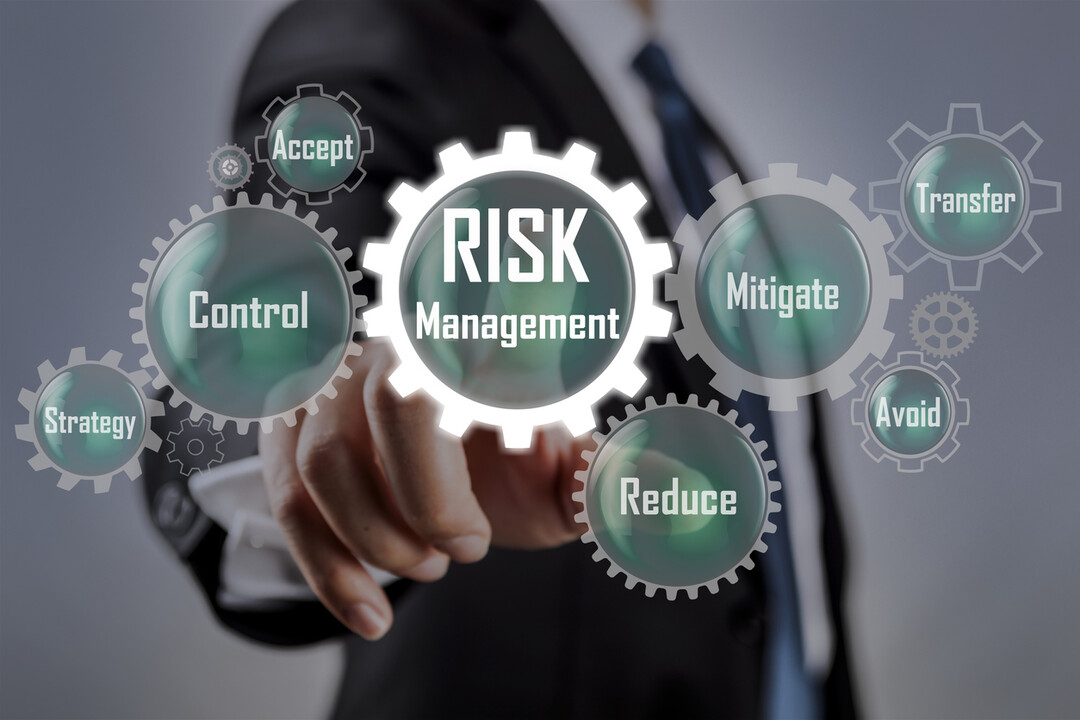
Risk Management in Banking: How Psychometric Credit Scoring Reduces Loan Defaults

Risk is the fundamental reality of banking. Whether a financial institution is issuing a loan, investing in assets, or managing liquidity, it constantly faces the challenge of balancing risk and return. In a world of growing uncertainty—driven by macroeconomic volatility, political unrest, technological disruption, and shifting customer behavior—risk management is no longer just a back-office compliance function. It’s central to a bank’s strategy and long-term sustainability.
Traditional risk assessment methods—especially in credit underwriting—rely on historical financial data, collateral, and credit bureau scores. But what happens when such data is incomplete or unavailable? What about the millions of people in developing economies who are creditworthy but excluded from formal finance due to a lack of documentation? How can banks safely lend in such markets without taking on excessive risk?
This is where psychometric credit scoring enters the conversation. By analyzing behavioral traits, personality profiles, and cognitive patterns, psychometric tools can provide an alternative lens to assess a borrower’s willingness and ability to repay. More than a niche innovation, psychometric scoring is rapidly proving to be a powerful complement to traditional credit assessment—enhancing risk management, expanding financial inclusion, and even improving portfolio quality.
This blog explores risk management in banking in depth and unpacks how psychometric credit scoring offers a robust, scalable, and data-driven way to manage credit risk, especially in underserved markets.
Part I: Understanding Risk Management in Banking
What Is Risk Management?
Risk management in banking refers to the systematic process of identifying, measuring, monitoring, and mitigating various types of risks that can affect a financial institution’s performance and stability. The goal is not to eliminate all risks—an impossible task—but to manage them in a way that aligns with the bank’s strategic objectives and regulatory obligations.
Why Is Risk Management So Critical?
Banks are custodians of public trust. They operate in a highly leveraged environment—borrowing short-term from depositors and lending long-term to borrowers. A small miscalculation in risk can lead to massive losses, erosion of capital, reputational damage, or even systemic collapse, as witnessed in the 2008 global financial crisis.
Effective risk management protects:
- Capital adequacy
- Liquidity levels
- Profitability
- Reputation
- Regulatory compliance
It also enables more informed decision-making across product design, pricing, portfolio diversification, and expansion strategies.
Part II: The Key Categories of Risk in Banking
1. Credit Risk
Definition: The risk of loss due to a borrower’s failure to repay a loan or meet contractual obligations.
Sources:
- Default or delinquency
- Deterioration in creditworthiness
- Sectoral or geographic concentration
Management Tools:
- Credit scoring models
- Collateral requirements
- Portfolio diversification
- Loan covenants
2. Market Risk
Definition: The risk of losses due to fluctuations in market prices—such as interest rates, foreign exchange rates, and equity prices.
Examples:
- Interest rate risk in fixed-income portfolios
- Currency risk in international lending
- Equity risk in trading operations
Management Tools:
- Value-at-Risk (VaR) models
- Stress testing
- Hedging strategies
3. Liquidity Risk
Definition: The risk that a bank will not be able to meet its financial obligations when they fall due, without incurring unacceptable losses.
Causes:
- Sudden withdrawal of deposits
- Inability to liquidate assets quickly
- Market disruptions
Management Tools:
- Liquidity coverage ratio (LCR)
- Contingency funding plans
- Cash flow forecasting
4. Operational Risk
Definition: The risk of loss due to inadequate or failed internal processes, people, systems, or external events.
Examples:
- Fraud
- Cyberattacks
- System outages
- Regulatory fines
Management Tools:
- Internal controls
- Business continuity plans
- Risk and control self-assessments (RCSAs)
5. Compliance and Regulatory Risk
Definition: The risk of legal or regulatory sanctions due to non-compliance with laws, regulations, or internal policies.
Key Drivers:
- KYC/AML breaches
- Data protection failures
- Licensing violations
Management Tools:
- Compliance monitoring systems
- Regulatory reporting tools
- Staff training
Part III: The Credit Risk Conundrum
Credit risk is arguably the most consequential and challenging risk for most banks, especially those focused on lending to individuals and SMEs. While large corporates come with audited financials, small borrowers often lack formal documentation. Traditional credit scoring models—reliant on historical repayment behavior—exclude millions of “thin-file” or “no-file” individuals.
As a result, banks face a difficult trade-off:
- Lend conservatively, limiting risk but also growth and financial inclusion.
- Lend aggressively, expanding access but risking higher default rates.
To navigate this trade-off, banks need innovative tools to assess borrower quality—especially when conventional data is scarce or unreliable.
Part IV: Enter Psychometric Credit Scoring
What Is Psychometric Credit Scoring?
Psychometric credit scoring involves evaluating a person’s creditworthiness based on their psychological and behavioral traits rather than relying solely on financial history. It’s grounded in psychometrics—the science of measuring mental capacities and personality traits.
Typical psychometric assessments measure:
- Personality (e.g., conscientiousness, agreeableness)
- Attitudes toward risk and responsibility
- Cognitive abilities (e.g., problem-solving, memory)
- Honesty and integrity
- Motivation and ambition
These are measured through standardized questionnaires, gamified tasks, and AI-driven analysis.
How Does It Work?
- Borrower takes a psychometric assessment (usually on a mobile device or computer).
- Responses are analyzed using machine learning models trained on previous outcomes (i.e., who repaid and who defaulted).
- Scores are generated, representing the likelihood of repayment.
- Banks use the score to supplement or replace traditional data in credit decisions.
Part V: How Psychometric Scoring Enhances Risk Management
1. Unlocks Credit for the Unscored
Challenge: Over 3 billion adults globally have no access to credit or are underbanked due to lack of formal income, collateral, or credit history.
Solution: Psychometric scoring enables banks to extend loans safely to new segments—like informal workers, smallholder farmers, or gig economy workers—by providing a scientifically valid proxy for creditworthiness.
Risk Benefit: Reduces adverse selection and enables diversification without sacrificing risk control.
2. Enhances Early Detection of Risk
Traditional models rely on lagging indicators like past defaults.
Psychometric tools provide leading indicators—flagging potential risk based on traits like impulsivity, overconfidence, or risk tolerance.
Risk Benefit: Improves early warning systems and proactive risk management.
3. Complements Existing Models
Psychometric scoring is not a replacement but an enhancement.
By combining financial, behavioral, and psychometric data, banks can create hybrid models that are more accurate and inclusive.
Risk Benefit: Increases predictive power and reduces blind spots in risk evaluation.
4. Minimizes Fraud and Misrepresentation
Because psychometric tests measure traits that are difficult to fake (e.g., response consistency, reaction time), they reduce the risk of application fraud.
Risk Benefit: Adds a layer of defense against manipulation and false information.
5. Adaptable to Local Contexts
Psychometric tools can be trained on local borrower data, adjusting for cultural, linguistic, and socioeconomic differences.
Risk Benefit: Improves relevance and accuracy in diverse markets.
Part VI: Psychometric Scoring in Action – Case Studies
Case Study 1: Emerging Markets SME Lending
A microfinance institution in East Africa used psychometric scoring to assess first-time loan applicants with no financial history. After training the model on repayment outcomes, they achieved:
- 30% lower default rates compared to non-psychometric loans
- 50% faster decision times
- Improved gender and rural inclusion
Case Study 2: Digital Lenders in Asia
A fintech lender in Southeast Asia integrated psychometric data into their mobile loan app. Applicants completed a 10-minute test as part of the application process. Results:
- Approval rates increased by 25% among previously rejected borrowers
- Portfolio performance improved by 15%
- Reduced reliance on expensive credit bureau data
Part VII: Addressing the Skepticism
Is It Really Reliable?
Yes—numerous studies by the World Bank, Harvard, and financial institutions have shown that psychometric models can predict default with accuracy comparable to traditional credit scores, especially in thin-file segments.
Can It Be Manipulated?
Tests are designed to detect inconsistency, gaming attempts, and dishonesty. The use of AI helps flag abnormal response patterns, time anomalies, or scripted behavior.
What About Privacy?
Reputable providers follow strict data privacy and consent protocols, storing only anonymized traits, not raw responses. Transparency and opt-in participation are standard.
Part VIII: Implementation Considerations
Key Success Factors
- Localization: Train models on regional data to ensure cultural fit.
- Integration: Combine with financial and alternative data for best results.
- Staff Training: Educate credit officers and risk teams on interpreting scores.
- Monitoring: Continuously track performance and recalibrate models.
Pitfalls to Avoid
- Over-reliance on psychometric scores alone
- Inadequate testing and validation
- Poor user experience (confusing or lengthy assessments)
- Ignoring ethical and fairness concerns
Part IX: The Future of Risk Management in Banking
As banking becomes more digital, data-driven, and customer-centric, the future of risk management lies in intelligent integration. Psychometric credit scoring is one piece of a broader transformation—toward more inclusive, agile, and precise risk tools.
Expect to see:
- Embedded psychometric scoring in mobile apps and digital onboarding
- Real-time behavioral monitoring (e.g., spending patterns, app usage)
- AI and explainable ML models that blend traditional and non-traditional signals
- Risk-as-a-Service platforms for smaller lenders
Conclusion
Risk management is the backbone of sound banking. In a rapidly evolving financial landscape, traditional credit assessment methods are being stretched to their limits—especially when serving underserved, informal, or first-time borrowers.
Psychometric credit scoring offers a powerful solution. By tapping into human behavior and cognitive patterns, it opens new frontiers in assessing creditworthiness where data is thin but potential is vast. For banks seeking to balance risk, growth, and inclusion, it’s not just an innovation—it’s a necessity.
As this technology matures, banks that embrace psychometric scoring today will be better positioned to lead tomorrow’s credit markets—with smarter risk models, stronger portfolios, and wider social impact.

